How the Piano’s Pedals Changed the Sound of Playing
Piano pedals history explains how early mechanisms gave players new control over volume, resonance and colour, and how to hear those choices in a score.
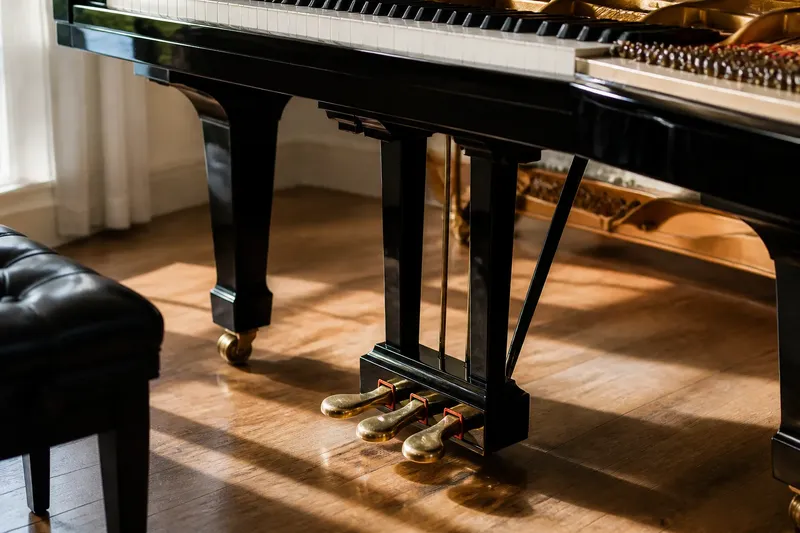
What does a piano pedal actually change, and why did players need more than one? Piano pedals history begins with a practical problem: early pianos could not sustain a tone or vary its colour as readily as the instruments and musical styles that came before them. Follow the mechanisms in the order they developed, and each one reveals a different way composers and players shaped sound.
Start with the piano’s changing sound
A piano note begins when a hammer strikes a string. The player can alter the force of that strike, but after the hammer has set the string vibrating, a finger alone cannot make the note louder or keep it sounding indefinitely. The instrument’s pedals offered other controls, operated by the feet while the hands continued to play.
Early pianos were quieter and had a more direct, quickly fading tone than many later instruments. As makers expanded their range and strength, players sought ways to sustain notes, soften the sound and shape its colour. A pedal was not simply an accessory: it altered the instrument’s response, giving a player a new kind of expressive choice.
Hear how the damper pedal sustains sound
The damper pedal, usually the right-hand pedal, is the one most listeners recognise. Without it, dampers rest against strings and stop them vibrating when a key is released. Pressing the pedal lifts those dampers, allowing struck strings to ring on and letting other strings resonate sympathetically.
That resonance can join separate notes into a connected phrase, enrich a chord or let a bass note continue beneath a changing melody. It can also blur harmony if held through chords that do not belong together. The musical question is not simply whether to use the pedal, but when the harmony changes and how much lingering sound the passage can bear.
Say you are playing a short melody over a bass note that should continue beneath it. You press the damper pedal as the bass sounds, then release and press it again at the next harmonic change; the bass remains resonant while the new chord does not inherit the previous one’s muddiness. This is the basic idea behind changing the pedal with the harmony, though the exact timing depends on the instrument and passage.
Notice the earlier shift pedal and its changing role
The shift pedal, generally on the left, changes the action so the hammers strike the strings differently. On many grand pianos, pressing it moves the keyboard and action slightly sideways, altering which strings the hammers meet. The resulting tone is usually softer and subtly different in colour.
On early pianos, makers provided a related control often called the una corda, meaning “one string”. In some instruments, it shifted the action so a hammer struck fewer strings. The exact mechanism varied, and the change could be more pronounced than on a modern concert grand. In either case, the point was not merely to reduce loudness: the altered contact gave the player a contrasting shade.
Listen for passages where a score asks for a delicate, veiled sound. The shift pedal can help create that contrast, but it does not replace a light touch. A player still shapes each note with the fingers; the pedal changes the instrument’s starting conditions.
Compare the sostenuto pedal with full sustain
The middle pedal on a modern piano is often sostenuto. It holds the dampers up only for notes already being played when the pedal is pressed. Later notes can sound without being sustained by that pedal, so a pianist may keep a bass or chord ringing while playing clearer figures above it.
This selective action differs from the damper pedal, which lifts dampers across the strings broadly. It also differs from the practice pedal found on many upright pianos, which lowers a strip of felt between hammers and strings to make the sound quieter. Not every piano has a sostenuto pedal; the middle pedal’s function can vary by instrument.
To identify the distinction in a recording, attend to a held note beneath moving notes. If the lower sound continues while the upper line remains comparatively clear, selective sustaining may be involved. The listening clue is the separation of lingering tones, not the mere presence of a pedal effect.
Which pedal suits which expressive purpose?
Why does the damper pedal make notes overlap?
It lifts the dampers, so strings keep vibrating after keys are released. Resonance adds warmth and connection, but overlapping harmonies can make the music indistinct.
What does the shift pedal change?
It alters how the hammers meet the strings, producing a softer or differently coloured sound. The mechanism and degree of change depend on the piano.
How is sostenuto different from the damper pedal?
Sostenuto holds only the notes sounding when it is engaged, while the damper pedal sustains a much broader range of strings. This lets a player preserve selected tones without adding the same resonance to every later note.
Why do old scores sometimes use different pedal markings?
Pedal instructions reflect the instruments and mechanisms available to the composer, which could differ from those on a modern piano. A marking may describe a desired sound or a particular action, so readers should consider the passage as well as the notation.
Read pedal markings as musical choices
When approaching a score, first look for the pedal signs and identify what the instrument can do. Then consider the harmony, texture and intended character. A long sustain may suit a spacious chord, while quick changes can preserve clarity in a moving passage. A shift pedal marking may signal a colour change as much as a quieter dynamic.
Historical performance adds another question: does the score’s instruction refer to a mechanism that differs from the one beneath a modern pianist’s feet? Early instruments might offer knee levers or hand-operated controls, and their pedals did not always match present-day conventions. The physical action matters, but so does the sound the player is trying to bring out.
Trace the development through what you hear
Listen to a passage first for notes that linger, then for changes in tone colour and volume. Those are separate effects, even when a performer combines them. The damper pedal expands resonance; the shift mechanism alters the attack; sostenuto, where available, preserves selected notes. Each answers a different musical need.
That distinction is the useful thread through piano pedals history: new mechanisms gave players more than a louder or longer sound. They made it possible to shape resonance, sustain chosen layers and change the character of an attack while the hands continued their work. When you hear a pedal in a performance, ask which of those choices the music is asking the player to make.